April 4–10, 2026
After seven consecutive days at sea, we finally spotted land.
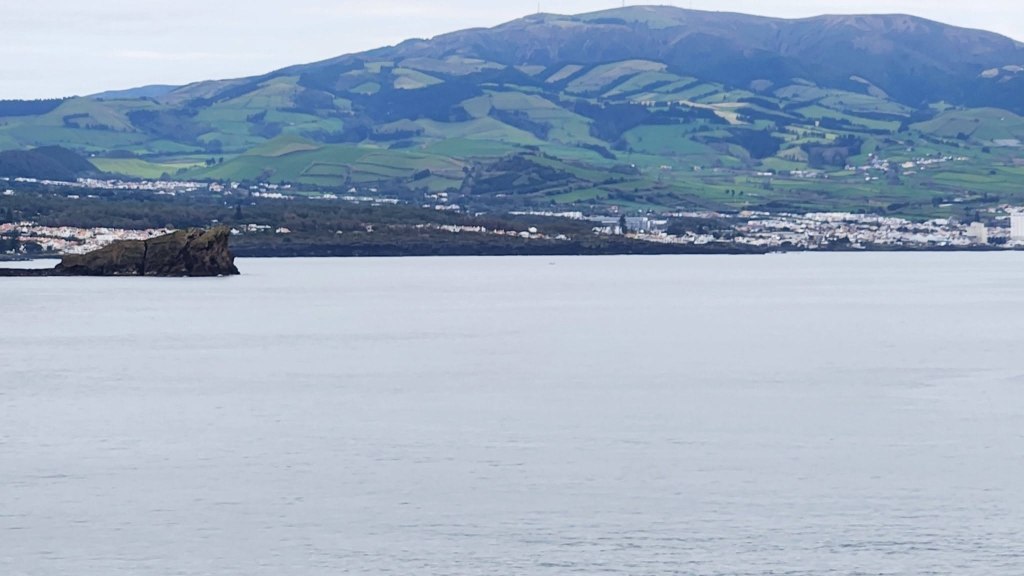
As the green hills of Ponta Delgada, Azores, appeared on the horizon, we were both excited to step onto solid ground again. Surprisingly, neither of us felt the lingering sensation of still being on the ship—a welcome surprise after spending an entire week crossing the Atlantic.
Our first stop ashore also happened to be one of our favorite kinds of excursions.
A food tour.
If you’ve followed our travels before, you already know that Jeff and I love exploring destinations through their local cuisine. Food tours combine three of our favorite things: walking, sightseeing, and eating. What’s not to love?
Discovering the Azores—One Bite at a Time
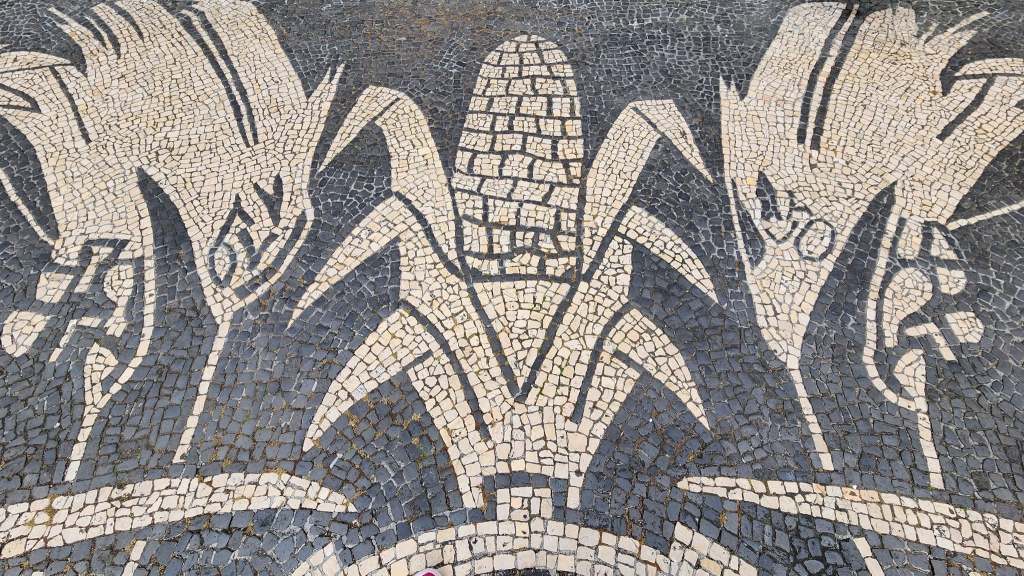
The Azores are made up of nine volcanic islands, each with its own character and traditions. As we wandered through Ponta Delgada, our guide explained that many of the decorative black-and-white stone streets weren’t simply artistic—they were built using ballast stones discarded by sailing ships that arrived to collect cargo. Rather than letting them go to waste, residents carefully hand-laid the stones into intricate mosaics that still decorate the city’s squares today.
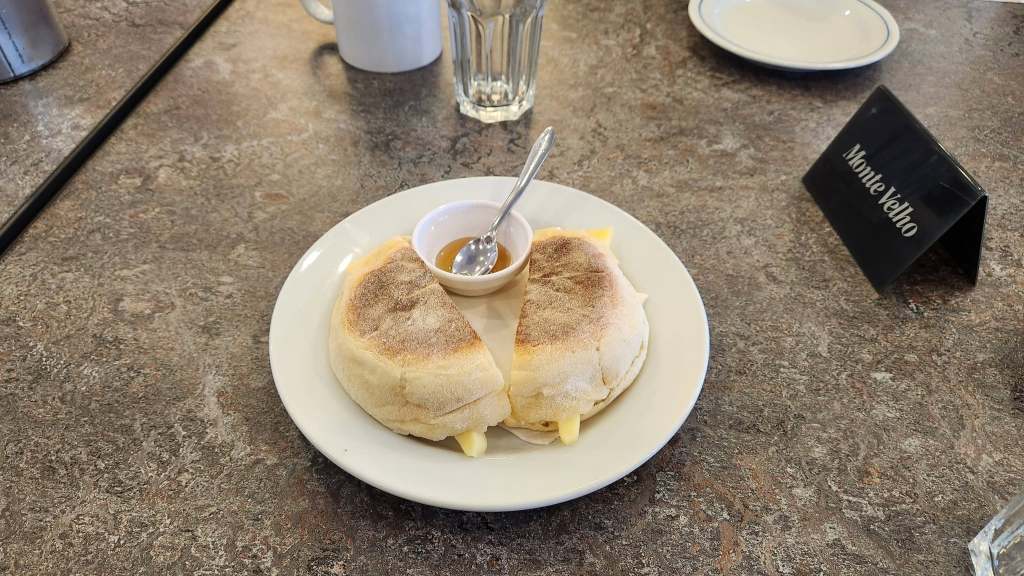
One of the first foods we sampled was a light corn bread served with locally produced cheese and honey.
Simple.
Fresh.
Absolutely delicious.
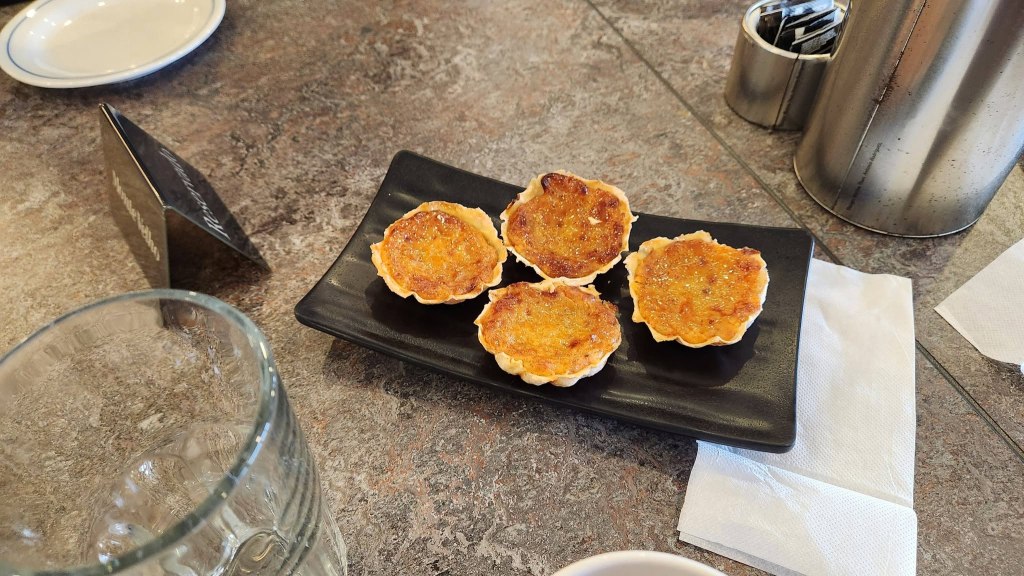
A little later came what may have been my favorite treat of the entire tour—a warm Portuguese fruit tart filled with creamy cheese and made with locally sourced ingredients. Before leaving the island, Jeff and I were already talking about finding a recipe so we could recreate them at home.
Our guide also led us through the bustling farmers market, where we discovered one of the Azores’ most famous exports: pineapples.
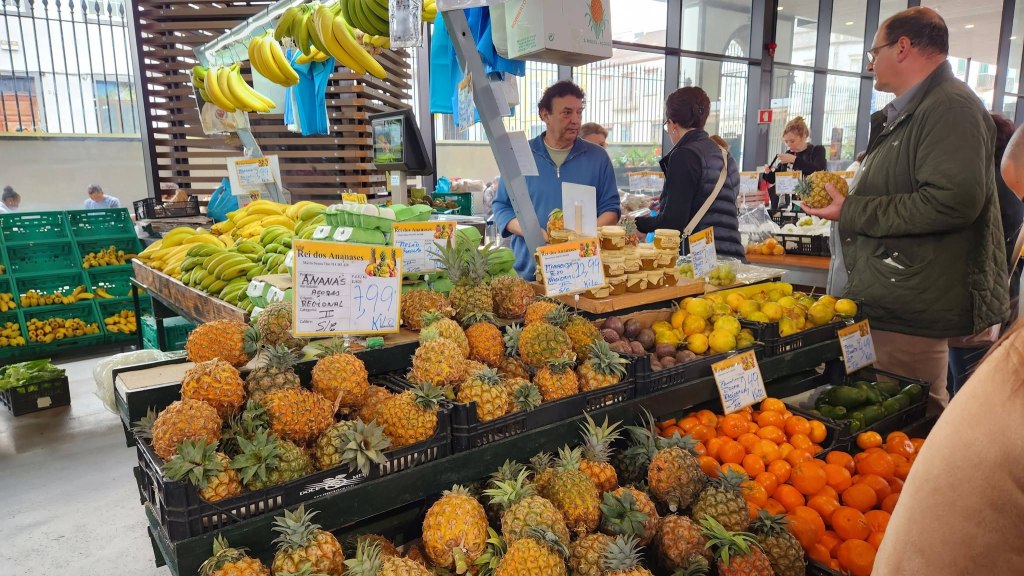
They’re much smaller than the ones we’re used to buying back home, but they’re also noticeably sweeter.
One detail I especially appreciated was that every produce vendor was required to label where their products came from—whether they were grown locally in the Azores, shipped from mainland Portugal, or imported from another country. It was a simple idea that made shopping wonderfully transparent.
Not everything tempted us, though.
One stop featured a locally popular fried fish served whole…
Eyes included.
I politely passed. Jeff took one bite…one.
Fortunately, beef and potatoes were also on the menu, which seemed like a much safer choice.
We even sampled a local orange soda and a regional wine, making for another memorable—and tasty—stop on the tour.
Walking Through History
After the food tour ended, we spent time wandering through the city at our own pace.
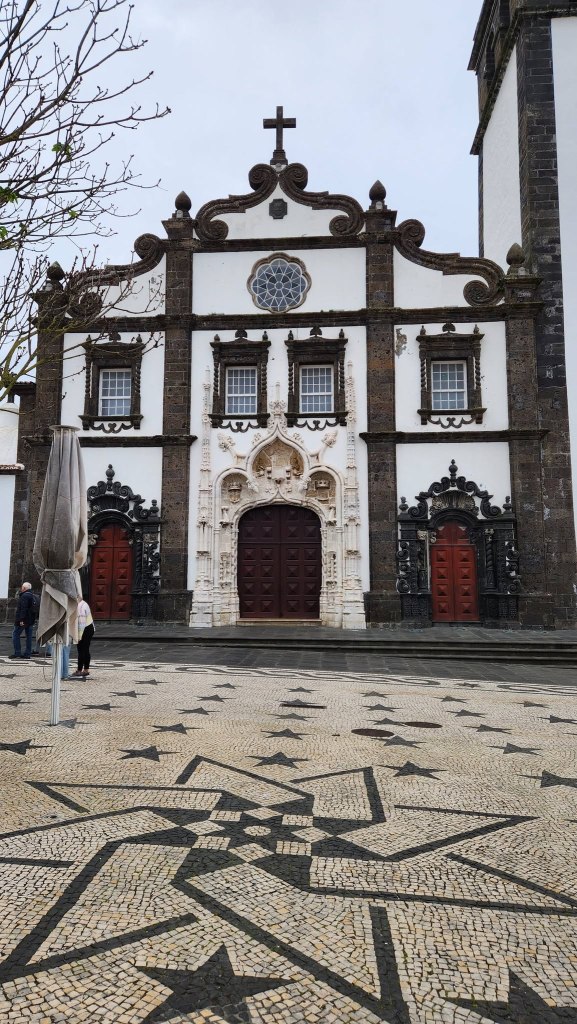
The São Sebastião Church beautifully illustrates the islands’ history. The original white limestone church was built using stone imported from mainland Portugal, while later additions—including the striking black sections—were constructed from the volcanic basalt found on the islands themselves.
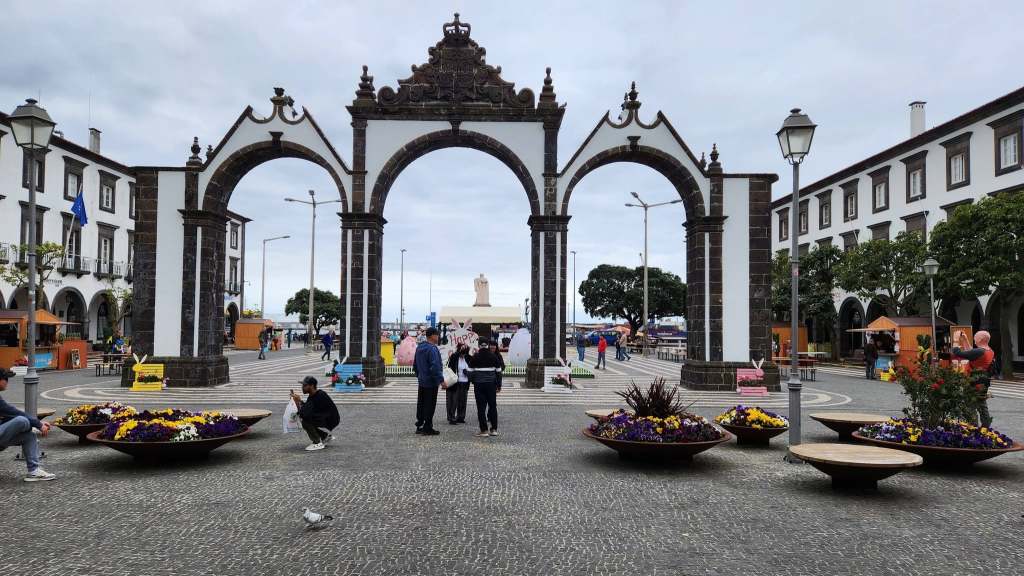
Nearby stood the city’s original harbor gate, once the main entrance for everyone arriving by sea before the waterfront expanded.
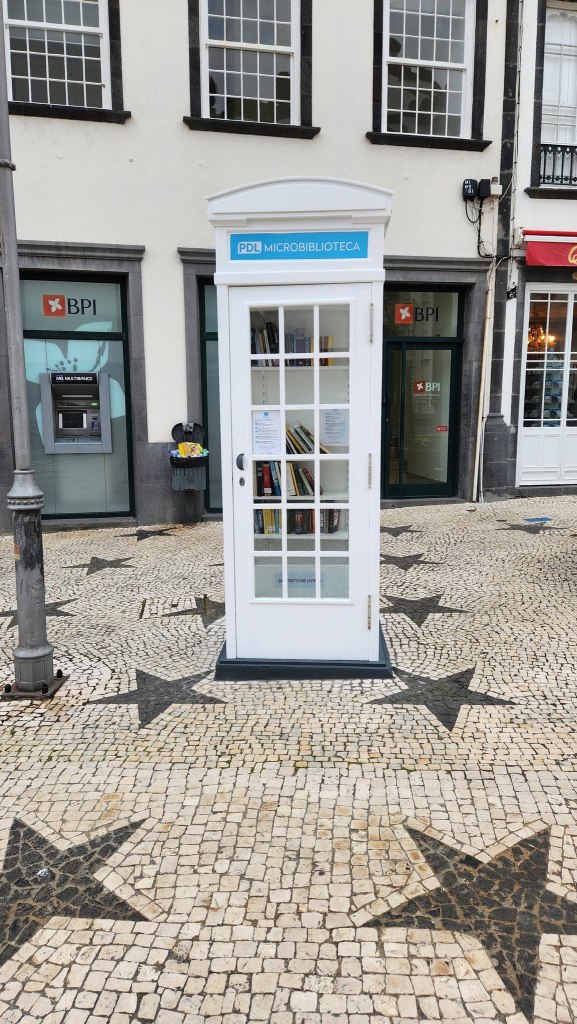
One unexpected sight made us smile: an old British-style phone booth that had been converted into a tiny free library. It was such a creative way to give new life to something from the past that I couldn’t resist taking a photo.
Standing in front of Enchanted Princess before returning aboard, I couldn’t help noticing an old wooden sailing ship nearby.
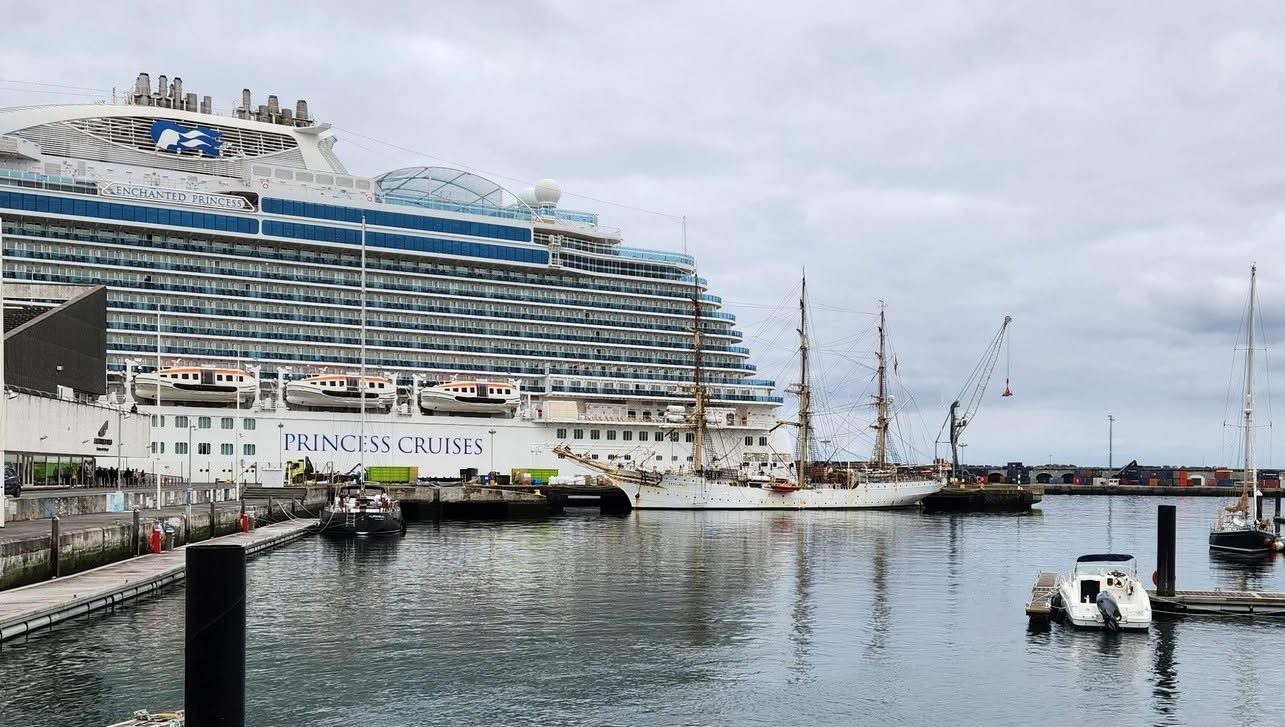
It made me wonder what it must have felt like for sailors centuries ago, finally reaching these islands after weeks—or even months—crossing the Atlantic under sail.
We had spent only a week at sea in remarkable comfort.
They earned every glimpse of land.
Easter at Sea
Back aboard the ship, we celebrated Easter while sailing east of the Azores.
The Piazza was decorated for the holiday, several Easter services were held throughout the day, and the crew organized festive games and activities for passengers.
It was a quiet but enjoyable way to celebrate while surrounded by nothing but open ocean.
Goodbye, Atlantic
A few days later, we received commemorative Transatlantic Adventure Crossing Certificates—a fun reminder that we’d successfully crossed one of the world’s great oceans.
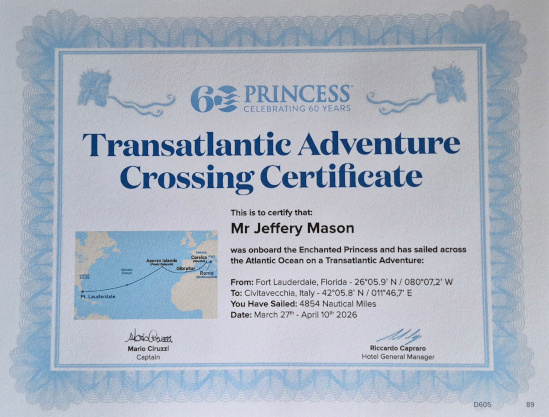
Even more exciting, the captain announced that the following morning we’d enter the Mediterranean Sea after stopping in Gibraltar.
One ocean down.
A new chapter of the journey was about to begin.
Exploring Gibraltar by E-Bike
We awoke early to find ourselves docked beneath the towering Rock of Gibraltar.
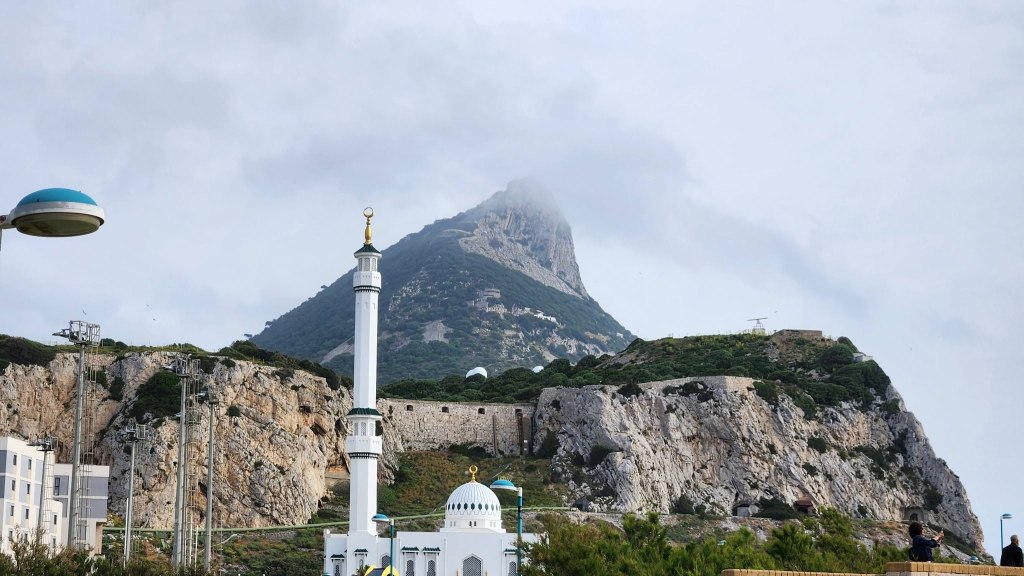
Our excursion for the day was an e-bike tour—a fantastic way to cover much more ground than we could have managed on foot.
Well…
Mostly fantastic.
At one point I became distracted watching an airplane overhead and managed to tip over on my bike.
Fortunately, the e-bike survived with no damage whatsoever.
My knee wasn’t quite so lucky.
I ended up with my first scraped knee since elementary school.
Our guide, Damien, originally from Morocco, proved to be both knowledgeable and entertaining as he introduced us to Gibraltar’s fascinating history.
We visited Europa Point and its picturesque lighthouse overlooking the Strait of Gibraltar.
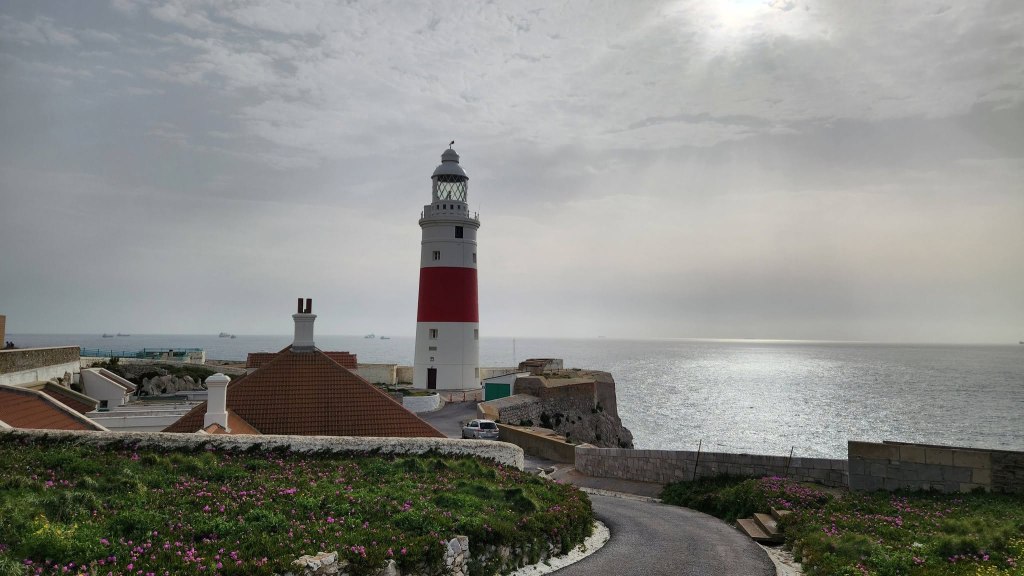
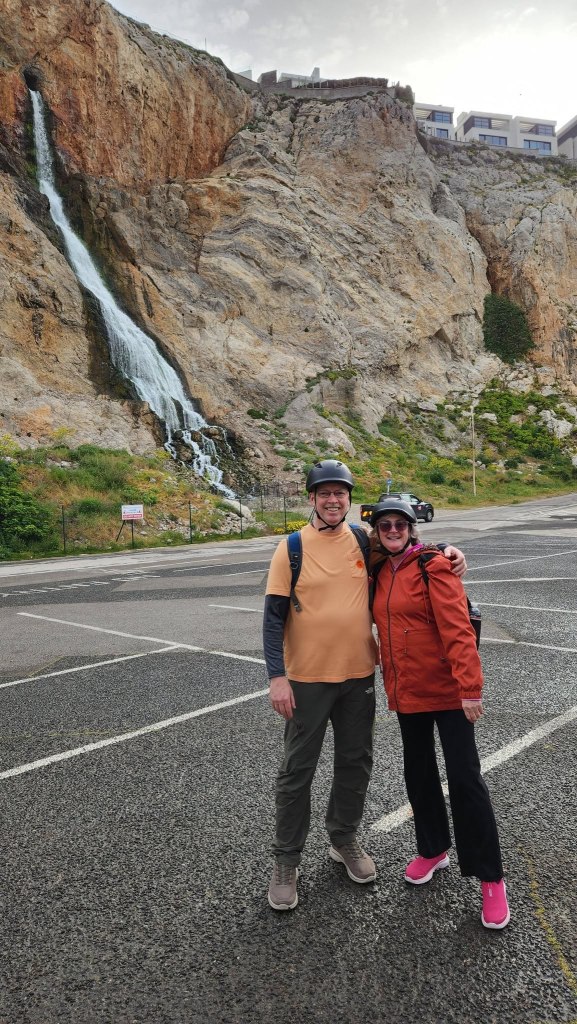
We stopped beside what looked like a beautiful waterfall, only to learn it wasn’t natural at all. The cascading water is actually discharge from Gibraltar’s desalination plant—proof that appearances can be deceiving.
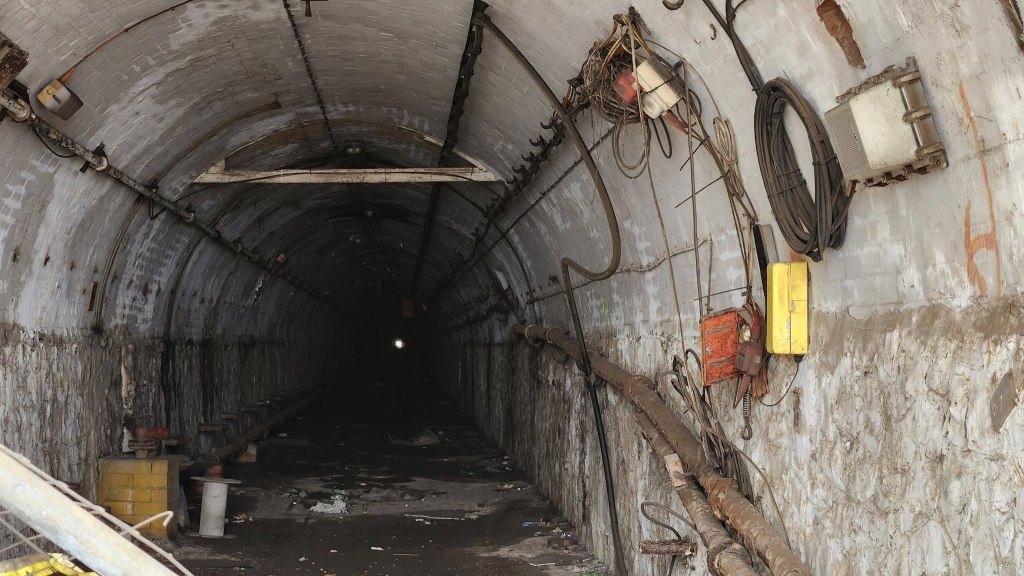
One of the most fascinating stops was inside Gibraltar’s vast tunnel system.
Over the past two centuries, more than 34 miles (55 kilometers) of tunnels have been carved into the Rock, many of them during World War II. Walking through those passageways offered a glimpse into Gibraltar’s incredible strategic importance.
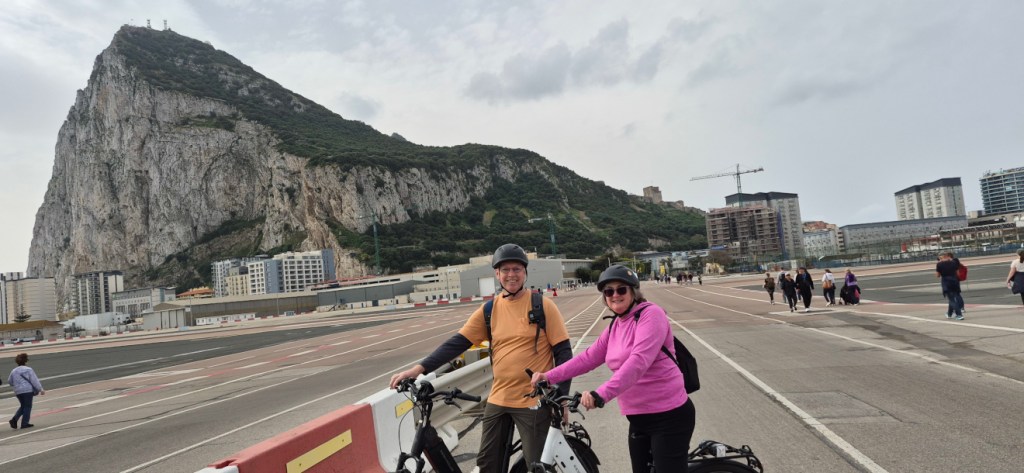
Perhaps the most unusual experience of the day came when we rode our bikes…
Across an airport runway.
Yes, really.
The main road once crossed directly over Gibraltar’s runway, although a tunnel now carries most vehicle traffic underneath. Pedestrians and cyclists are still allowed to cross the active runway between flights—a very unusual experience and certainly one we’ll never forget.
Before leaving Gibraltar, we officially entered the Mediterranean Sea.
Europe suddenly felt very close.
An Unexpected Change of Plans
Our next scheduled stop was Ajaccio, Corsica.
Unfortunately, travel doesn’t always go according to plan.
A strike by the French fishermen’s union had effectively closed Corsica’s ports, and despite negotiations with the French government, our captain eventually announced that our visit had been canceled.
Instead, we enjoyed one final sea day.
Laundry became the order of the day as we prepared for more than two weeks traveling through Italy without the convenience of the ship’s laundry facilities.
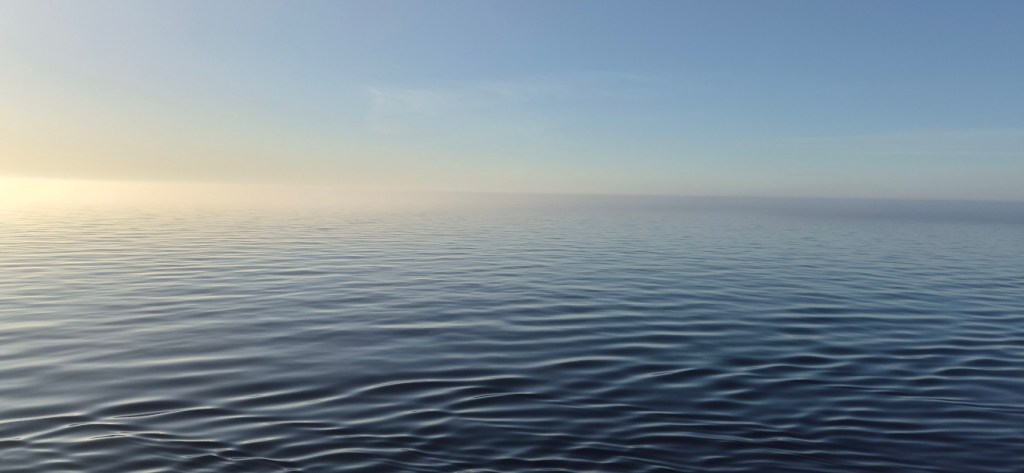
The Mediterranean couldn’t have looked more peaceful, with water so calm it resembled polished glass.
We also spent time playing cards with our new friends John and Lisa from California. One of the unexpected gifts of this crossing was the friendships we’d formed during those long days at sea. Before the evening ended, we exchanged phone numbers and addresses, promising to stay in touch.
(And yes…I finally forgave Jeff for being born in California.)
One Final Reminder
As we packed our suitcases for disembarkation, we assumed our cruise was coming to a quiet close.
Instead, the captain announced another medical emergency aboard.
The ship diverted to Porto Torres on the island of Sardinia, where the Italian Coast Guard came alongside to transfer the passenger—and their spouse—to shore for medical treatment.
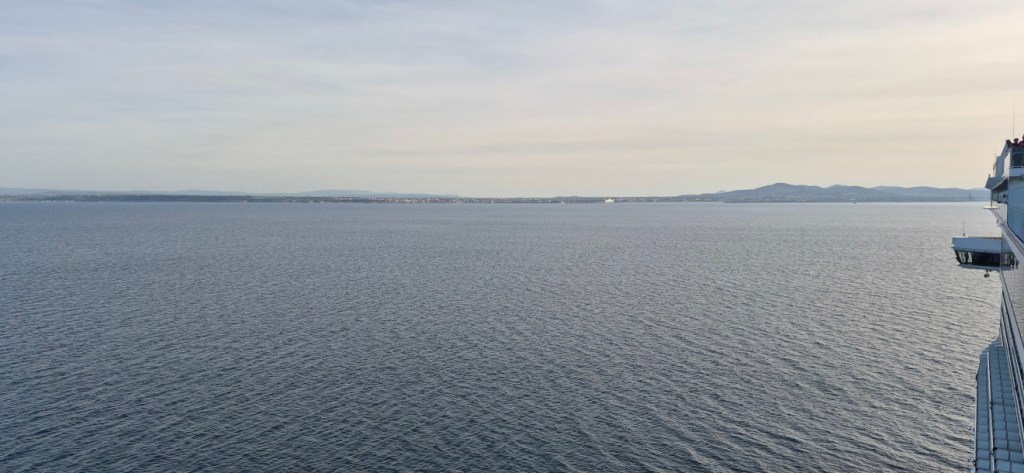
Watching the rescue unfold reminded us once again how self-contained life aboard a cruise ship really is. When emergencies happen in the middle of the ocean, help doesn’t arrive with the sound of sirens. Instead, the ship changes course, coordinates with local authorities, and does everything possible to get passengers the care they need.
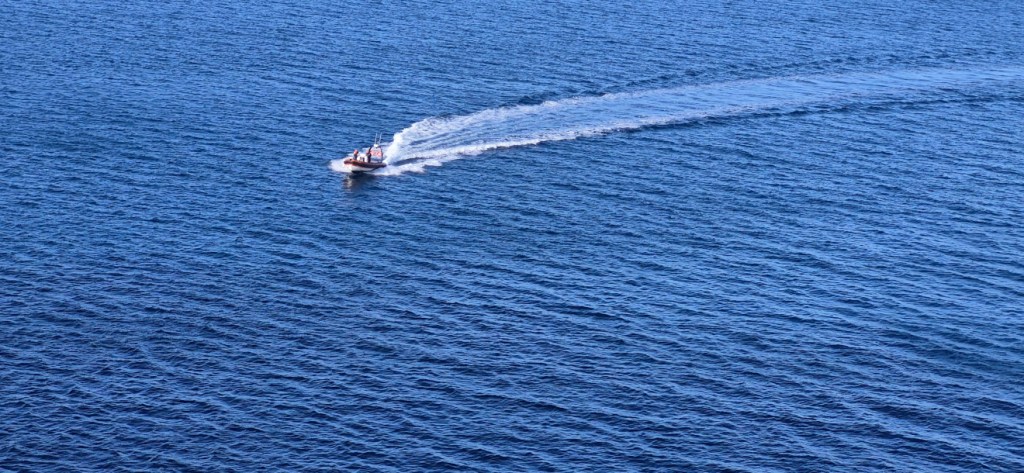
We hoped the traveler would make a full recovery.
Welcome to Italy
On the morning of April 10, Enchanted Princess eased into the harbor at Civitavecchia.
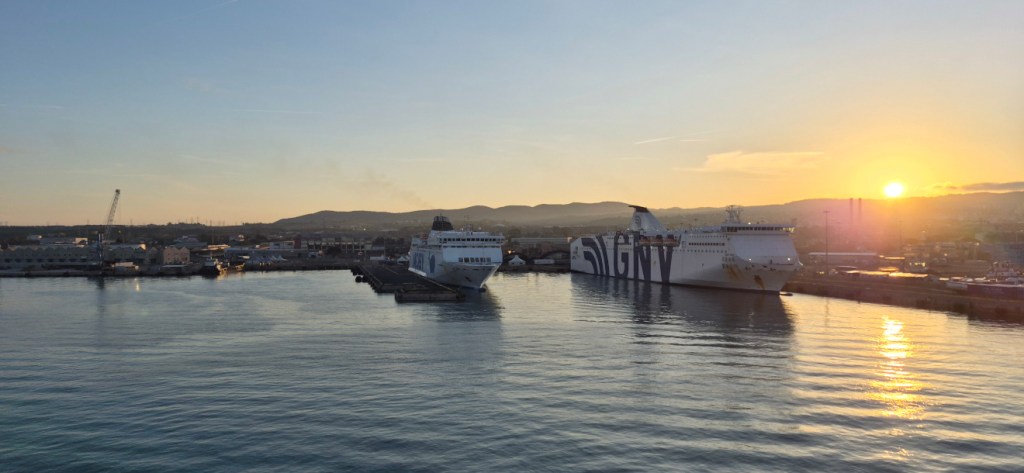
Our fourteen-night Transatlantic crossing had officially come to an end.
Although we couldn’t leave the ship until later that morning, we had to vacate our cabin early so the crew could prepare it for the next group of passengers.
Ahead of us lay a train ride into Rome, new European entry procedures to navigate, and fifteen unforgettable days exploring Italy.
Looking back, the crossing itself had become far more than simply transportation.
It had been a chance to slow down, meet wonderful people, experience life at sea, and watch an entire ocean slip quietly beneath our feet.
Now…
The real Italian adventure was about to begin.


Leave a Reply